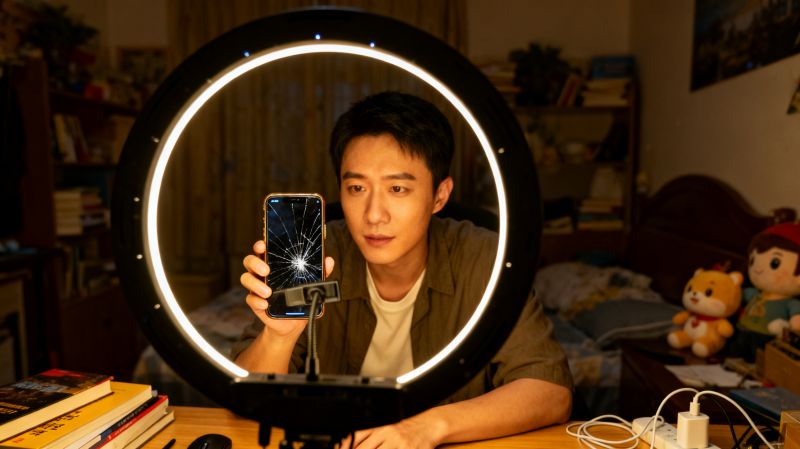
At 2 a.m. on a Tuesday, a Dongbodi Live stream typically peaks. The host—often a young woman in a makeshift studio—sings, chats。or just eats snacks while viewers send virtual gifts. These platforms, loosely translated as "understand it" live, operate in a gray zone of Chinese internet culture. They aren't household names like Douyu or Huya. Instead, Dongbodi Live refers to a cluster of small, app-based services that emerged around 2021, targeting users who want unfiltered, late-night interaction without the polished production of mainstream platforms.I spent three weeks lurking in these rooms last year. One host, who goes by Xiaoyu, broadcasts from a rented apartment in Zhengzhou. Her setup: a ring light, a cracked iPhone, and a whiteboard listing "tasks"—sing a song, tell a joke, drink a glass of water. Viewers pay in "coins" to trigger each task. On a good night。she clears 500 yuan. On a bad night, she logs off after two hours with less than 50. Dongbodi Live isn't a single company;it's a loose ecosystem of independent apps, many of which clone each other's interfaces. The shared DNA: low latency, heavy gamification, and a wink-and-nod approach to moderation.
Why does this matter?Because Dongbodi Live exposes a demand that mainstream platforms can't serve without risking regulatory blowback. Traditional streamers rely on advertising and brand deals. Dongbodi hosts live on micro-transactions—virtual roses, sports cars。even "private" one-on-one sessions. The economics are brutal. Platforms take 30–50% of every gift. Hosts who don't hit daily targets get their accounts throttled. I watched one host cry on camera after a viewer demanded a refund for a 200-yuan gift, claiming she "didn't smile enough." That's the reality behind the glitchy, ad-free interface.
Regulators have noticed. In late 2023, several Dongbodi Live apps were pulled from Android stores in Guangdong and Zhejiang provinces. The official reason: "failure to implement real-name verification." Unofficially, local officials told me these apps were seen as havens for minors and gambling-like gift mechanics. Yet the apps keep popping up under new names—"Dongbo," "Bodi Live," "DB Live." It's a game of whack-a-mole. For users。the appeal persists: no celebrity hosts, no corporate sponsors, just raw, sometimes uncomfortable human interaction. One regular viewer, a night-shift security guard in Foshan, told me he spends 300 yuan a month on Dongbodi Live. "It's cheaper than therapy," he said, only half-joking.Will Dongbodi Live survive?Probably not in its current form. The gray area is shrinking. But the behavior it reveals—the hunger for low-stakes, transactional intimacy—won't disappear. Big platforms are already copying the format with tighter controls. For now, Xiaoyu still streams most nights. Her whiteboard has a new task: "Stay online until sunrise." She doesn't always make it. But someone always pays her to try.